

EKG & Telemetry Technician Certificate Program
- Certificate
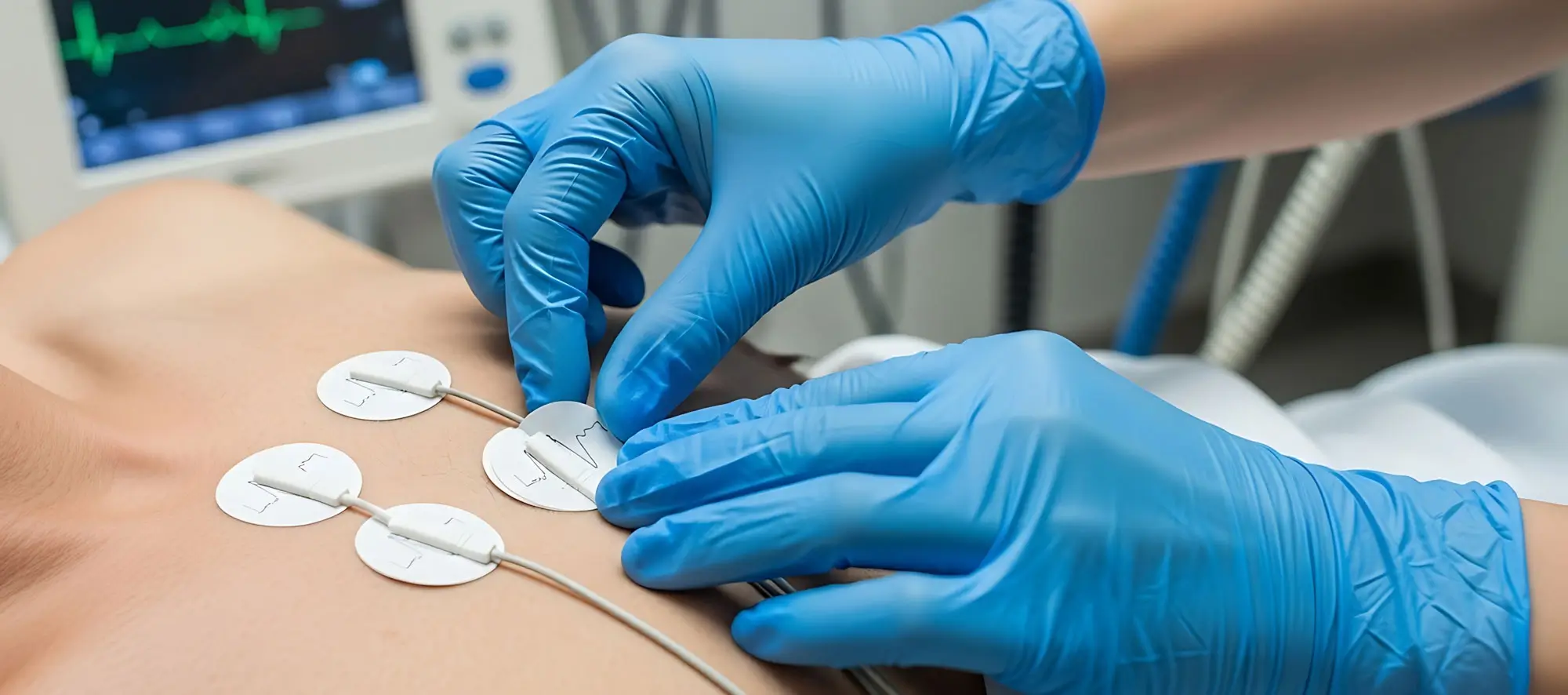
Pursue a rewarding career in the fast-growing healthcare field as an Electrocardiography and Telemetry Technician. EKG and telemetry monitors help patients of all ages by performing essential diagnostic tasks, measuring cardiac activity, and tracking vital heart rhythms under the supervision of a physician or nurse.
Attention to safety, precision, communication, and critical-thinking skills are essential because patients depend on your professional care.
Important Dates
Next Start Date
Courses & Programs
EKG Technician
Length
Costs
Mode
Important Links
Prerequisites:
Applicants need a high school diploma or high school equivalency certificate. Individuals without a GED are encouraged to contact Adult Education to get started.
Certifications
Includes BLS CPR certification and preparation for national certification testing.
Careers & Outcomes
Certified technicians are in high demand across hospitals, emergency rooms, cardiology clinics, diagnostics labs, and diverse specialized long-term care settings.
Reach Out To Us

Additional Program Information
Applicants need a high school diploma or high school equivalency certificate.
Individuals without a GED are encouraged to contact Adult Education to get started.
Effective September 1, 2017, HB 1508 amends the Texas Occupations Code Section 53 that requires education providers to notify potential or enrolled students that a criminal history may make them ineligible for an occupational license upon program completion. NOTE: Criminal history checks are required for clinical experience purposes.
Should you wish to request a review of the impact of criminal history on your potential licensure prior to or during your quest for a degree, you can visit this link and request a “Criminal History Evaluation”: https://www.precheck.com/
This information is being provided to all persons who apply or enroll in the program, with notice of the requirements as described above, regardless of whether or not the person has been convicted of a criminal offense. Additionally, HB 1508 authorizes licensing agencies to require reimbursements when a student fails to receive the required notice.
Frequently Asked Questions
Electrocardiography and Telemetry Monitoring
ECRD-1011
This course will provide students with the knowledge and skills to perform 12-lead
EKG, and telemetry monitoring. Theory includes basic understanding of the anatomy
of the cardiovascular system and the electrophysiology and hemodynamics of the heart,
EKG recording techniques, rhythm analysis, documentation, care and maintenance of
equipment, and recognition of arrhythmias and cardiac emergencies. Emphasis is on
proper lead placement, interpretation, proper interventions by the cardiac technician,
and professionalism and patient's rights in the healthcare setting. 64 contact hours
are required.
Introduction to 12-Lead ECG I
EMSP-1050
The course will cover the interpretation of 12-lead electrocardiograms (ECGs) to identify
dysrhythmias, axis deviation and myocardial ischemia, injury, and infarction. It will
discuss the clinical significance of abnormalities. 21 contact hours are required.
Texas Public Education Grants (TPEG)
State legislation has made grant funds available to students with financial need for workforce and career training classes. Limited funds are available for persons who qualify to assist with payment of a percentage of tuition for vocational courses. These limited funds are distributed on a first come, first served basis for qualified applicants, and vary by course. Books are not included. This grant does not require repayment and is applicable for programs with tuition over $1000.
A FAFSA (Free Application for Federal Student Aid) application is required and takes
at least two weeks to process. The student must have an active college account in
Colleague to apply.
Visit our Continuing Education Grants page to apply.
COM (College of the Mainland) Foundation Scholarships
COM offers 100 scholarships, which full-time and part-time students can apply for each year to help pay for tuition and textbooks. Only one COM Foundation scholarship will be awarded to any student.
Scholarships are available for students in all majors, and most scholarships are $500 per fall and spring semesters.
A FAFSA (Free Application for Federal Student Aid) application is required and takes at least two weeks to process. The student must have an active college account in Colleague to apply.
Visit the Scholarships page to apply.
Financial Aid
All students applying for financial aid should first complete the FAFSA, the Free Application for Federal Student Aid. This information is used to determine whether you are eligible for federal grants, certain scholarships, and work-study programs. Learn more about the FASFA.
Visit the Financial Aid page for more information.
The college will cancel a course that lacks sufficient enrollment three (3) business days prior to the class start date. When a course is canceled, every effort is made to notify all registered students promptly. A full refund is processed automatically. COM’s first form of communicating class cancellations is via email.
Disclaimer: The courses in this schedule will be taught as listed provided there are sufficient students enrolled in each section to justify the course offering. The College will cancel a course that lacks sufficient enrollment three working days prior to the class start date. The schedule of time, room and instructor reflect the intention of the College at the time the schedule is published. These are subject to change and their listing in the schedule is not an assurance to students that they will be taught exactly as listed.