

Process Technology
- AAS

The Process Technology Program offers students core courses related to the process operations industry that will prepare them to develop in their careers as safe, efficient and environmentally responsible Process Technicians.
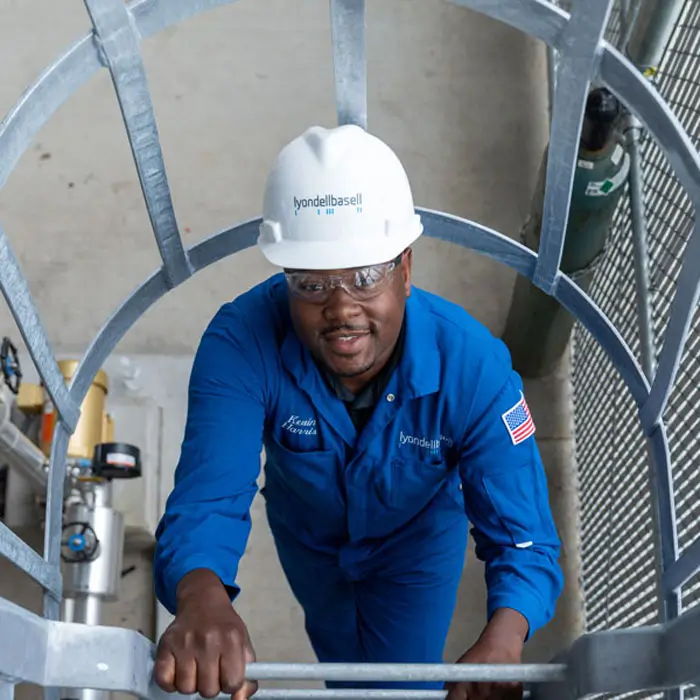
Students entering this program should realize that Process Operators generally work rotating shifts in both hot and cold environments, perform tasks requiring good mental and physical aptitude, climb tall structures and work with a variety of chemicals.
Application Deadline
Degrees & Certificates
Associate of Applied Science
Length
Costs
Mode
Important Links
Accreditation
College of the Mainland is accredited by the Southern Association of Colleges and Schools Commission on Colleges to award associate and baccalaureate degrees and certificates.
Careers & Outcomes
Reach Out To Us

Additional Program Information
Financial Aid and Scholarships Available
- How long does it take to complete the associate degree Process Technology Program?
- The program can be completed in five semesters if enrolled full-time and take about 14 credit hours per semester.
- Does the Process Technology Program have evening or weekend classes?
- The Process Technology Program at College of the Mainland offers a full schedule of both day and night classes.
- Will credits I earned for courses completed at another college or university transfer for credit towards my degree at College of the Mainland?
- Credits for courses completed at another institution are evaluated on a case-by-case basis. Credit may be awarded for comparable courses completed elsewhere.
- Will I be able to continue to work full-time while enrolled in the Process Technology Program?
- We have many students who work full-time; however, the work schedule may limit the number of classes a person can take in a semester.
- Can I attend classes on a part-time basis?
- Yes, nearly half of our students take classes part-time.
- What is the cost of the Process Technology Program?
- View our tuition and fees
- I already have a degree in another field of study. Does this other degree count towards my process technology degree?
- Courses completed for another degree may fulfill some of the general education requirements in the Process Technology Program. Talk to an advisor to determine specific course transfers.
- Does the College of the Mainland offer an operator certificate?
- The College of the Mainland only offers the two-year Associate of Applied Science. We no longer offer an operator certificate.
- Do local companies require an associate degree?
- Most of the local Texas City industry require an associate degree or equivalent process operations experience.
- What are the job opportunities?
- A degree in process technology can be used in a variety of fields including refinery operations, chemical plant operations, food processing, pulp and paper, power generation, pharmaceuticals, offshore work and many more.
- Can I work in the plants while I go to school?
- A few companies allow you to work in an entry-level job while attending school.
- I am worried about taking physics, chemistry and math. What can I do?
- While physics, chemistry and math are some of our most challenging courses, tutors are available to provide help.
- Whom do I talk to about signing up for classes?
- In order to enroll in classes, you must apply to College of the Mainland at www.com.edu/apply. Next, take the entrance exam in the Testing Center so that we can see where you place in math and English. Visit an advisor to set a schedule of classes, then register for the semester.
- Will you help me to get a job?
- The Process Technology Program is in close contact with many industries. While we do not guarantee a job, we will assist with placement through job postings and emails.
- Will this program help me to work at the plants?
- Yes, our local plants typically only hire operators with three to five years’ experience or with the process technology associate degree.
- Do I have to have a GED or diploma to take this program?
- Yes, in order to enroll in the program, you must have a high school diploma or a GED.
- Is financial aid available?
- Yes! Scholarships, grants and loans are available. Visit the COM Financial Aid Office to discuss financial aid options and application procedures. View scholarships at www.com.edu/scholarships or call 409-933-8508.
- What kind of conditions should I expect to work in?
- Chemical plants and refineries operate around the clock. Much of an operator’s work is outdoors, so the weather can be cold and wet in the winter to very hot in the summer.
- Do I have to climb up on those towers?
- The work that is going on in the chemical plant or refinery dictates what must be done. Climbing large towers can be a requirement of employment.
- Does the program give hands-on experience or is it all lecture?
- Many of our classes have hands-on labs associated with the classes. Our Unit Operations class is an entirely hands-on experience where the student learns to operate a distillation column.
Effective September 1, 2017, HB 1508 amends the Texas Occupations Code Section 53 that requires education providers to notify potential or enrolled students that a criminal history may make them ineligible for an occupational license upon program completion. Program specific information will be provided in course syllabi.