

Instrumentation & Electrical Technology
- Certificate
- AAS
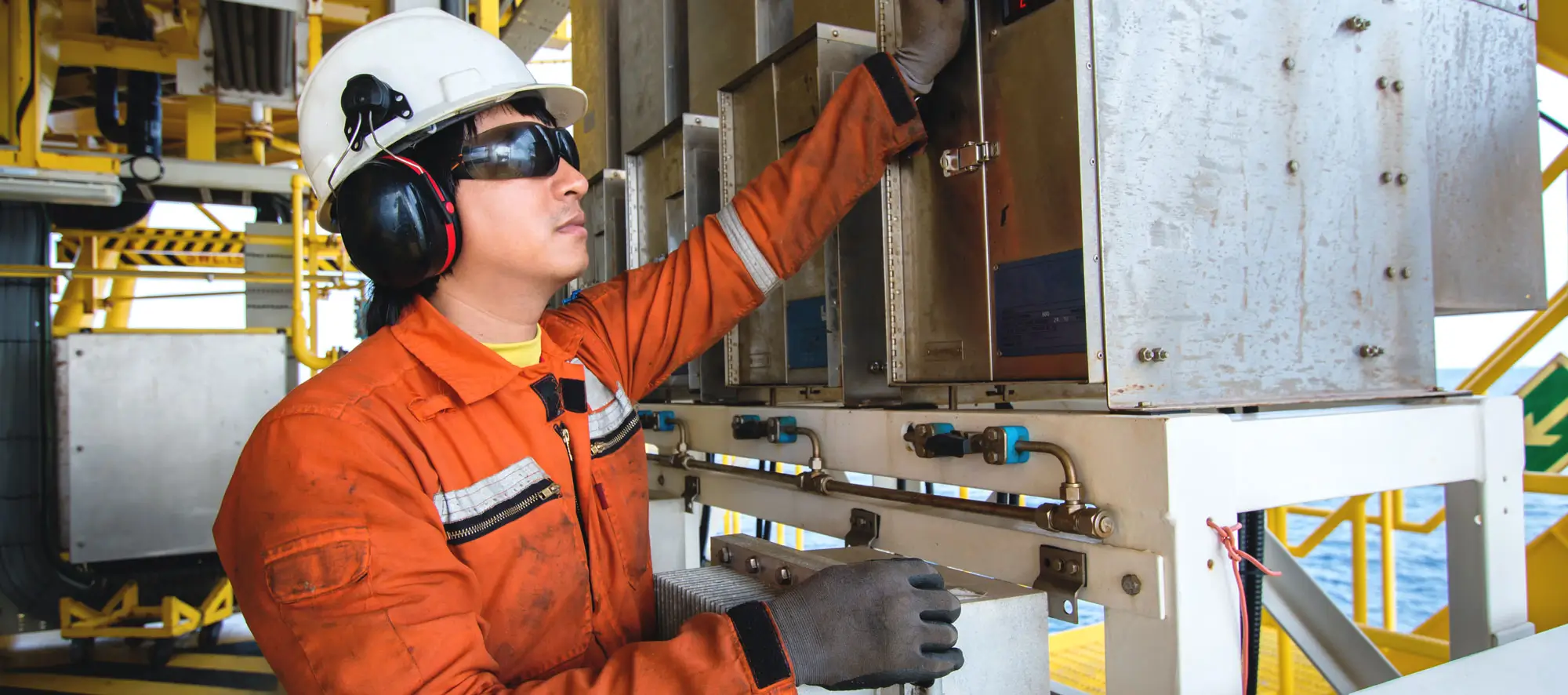
Launch a career in one of the Gulf Coast's most in-demand industries with College of the Mainland’s Instrumentation & Electrical (I&E) Technology program.
Our hands-on training prepares you to install, maintain and troubleshoot complex instrumentation and electrical systems used across refineries, chemical plants, and industrial facilities.
Whether you're starting from scratch or upgrading your skills, our flexible pathways help you move from entry-level roles to highly skilled technician positions.
Application Deadline
Degrees & Certificates
Level One Certificate – Instrumentation & Electrical Technology
Length
Costs
Mode
Important Links
Level Two Certificate – Instrumentation and Electrical Technology
Length
Costs
Mode
Important Links
Associate of Applied Science
Length
Costs
Mode
Important Links
Accreditation
College of the Mainland is accredited by the Southern Association of Colleges and Schools Commission on Colleges to award associate and baccalaureate degrees and certificates.
Program designed to meet industry standards and prepare for NCCER or ISA certifications.
How Certificates Stack
Level One Certificate – Instrumentation and Electrical Technology
Level Two Certificate – Instrumentation and Electrical Technology
Associate of Applied Science
Careers & Outcomes
Reach Out To Us

Additional Program Information
Financial Aid and Scholarships Available
| Event | Date |
|---|---|
| Next Start Date | Fall 2026 |
| Registration Opens | April 2026 |
| Application Deadline | August 15, 2026 |
Information Sessions
All students interested in the Instrumentation & Electrical Technology Program are encouraged to attend an information session.
- Apply to COM via ApplyTexas and select "Instrumentation & Electrical Technology".
- Meet with an advisor or enrollment coach to make sure you meet all program requirements.
- Choose Your Path:
- AAS – 4 semesters; 60 credit hours
- Level I Certificate – 2 semesters, 22 credit hours
- Level II Certificate – 3 semesters, 44 credit hours
- Can I work while I’m in the program?
-
Yes, flexible class options are available for working students.
- Does the program offer hands-on lab training?
-
Yes, labs are scheduled each semester and simulate real industrial environments.
- Is financial aid available?
-
Financial aid may be available for students in the program. Visit our financial aid page to learn more about the assistance available.
- What are the job opportunities with a Level I Certificate in I&E?
-
- Instrumentation or Technician Helper – Assist with I&E tasks and basic electrical work.
- Plant Maintenance Assistant – Support maintenance during outages or routine operations.
- Electrical Assembler – Help build and wire control panels.
- Calibration Assistant – Perform basic calibration under supervision.
- Facilities Maintenance Tech – Entry-level I&E support in industrial settings.
- Oilfield Services Tech – Assist with I&E functions at oilfield sites.
- What are the job opportunities with a Level II Certificate in I&E?
-
- Instrumentation or Electrical Technician – Install and maintain I&E systems.
- I&E Technician – Perform both electrical and instrumentation tasks.
- Control Systems Technician – Work with automation and control systems.
- Maintenance Technician – Conduct routine and emergency I&E maintenance.
- Automation or Field Service Technician – Support automated systems and provide on-site service.
- What are the job opportunities with an AAS in I&E?
-
Graduates with an Associate of Applied Science (AAS) degree may qualify for roles such as:
- Instrumentation Technician – Install and maintain process monitoring equipment.
- Electrical Technician – Service industrial electrical systems and controls.
- Controls/Automation Technician – Work with PLCs, DCS and automation systems.
- Electronics Technician – Support integrated electronic and mechanical systems.
- Maintenance Technician – Handle combined electrical, mechanical and instrumentation tasks.
- Calibration Technician – Ensure accuracy of measurement tools.
- Field Service Technician – Provide on-site I&E system support.
- Process/Plant Technician – Operate and troubleshoot equipment with I&E focus.
- Automation Specialist – Assist with automation design and optimization.
- How long is the program?
-
Level I Certificate: 2 semesters (24 credit hours)
Level II Certificate: 3 semesters (44 credit hours)
Associate of Applied Science (AAS) Instrumentation & Electrical Technology: 4 semesters (60 credit hours)
- Do I have to have all my immunization completed before I apply?
-
For students who are 21 years old and younger, submit current meningitis vaccination records, which can be submitted via email to admissions@com.edu or the Upload Documents Portal.
Vaccinations must be no more than five years old and must be administered more than 10 days before the start of classes.
If students are unable, or unwilling, to provide vaccination records, they may complete a vaccination waiver. This waiver must also be sent to admissions@com.edu.
- International Society of Automation (ISA)
- National Center for Construction Education and Research (NCCER)
- IEEE Industry Applications Society (IAS)
- IBEW Local 527 / Galveston Electrical JATC – International Brotherhood of Electrical Workers local based in Galveston County, with the Galveston Electrical Joint Apprenticeship and Training Committee offering electrical and instrumentation classes and CE for license holders.
- NECA – Galveston Division (Coastal Sabine Chapter) – The National Electrical Contractors Association lists a Galveston Division under its Coastal Sabine chapter, including member contractors such as Crescent Engineering (La Marque) and Galco Electric (Texas City)
- IEEE – Houston Section (Region 5) – IEEE Region 5 includes Texas, with the Houston Section covering the greater Houston–Galveston area; within IEEE you can plug into the Instrumentation & Measurement Society and Power & Energy Society for technical meetings and standards-focused activity.